Humanity has always sought ways to simplify daily life, advance business, and stay connected across distances. Modern technology is now advancing at a faster pace than at any other point in human history. The most profound shift today isn’t just about managing data or building faster electronics—we have entered an era where Artificial Intelligence (AI) plays a central role in shaping our daily lives.
What Are Autonomous AI Agents?
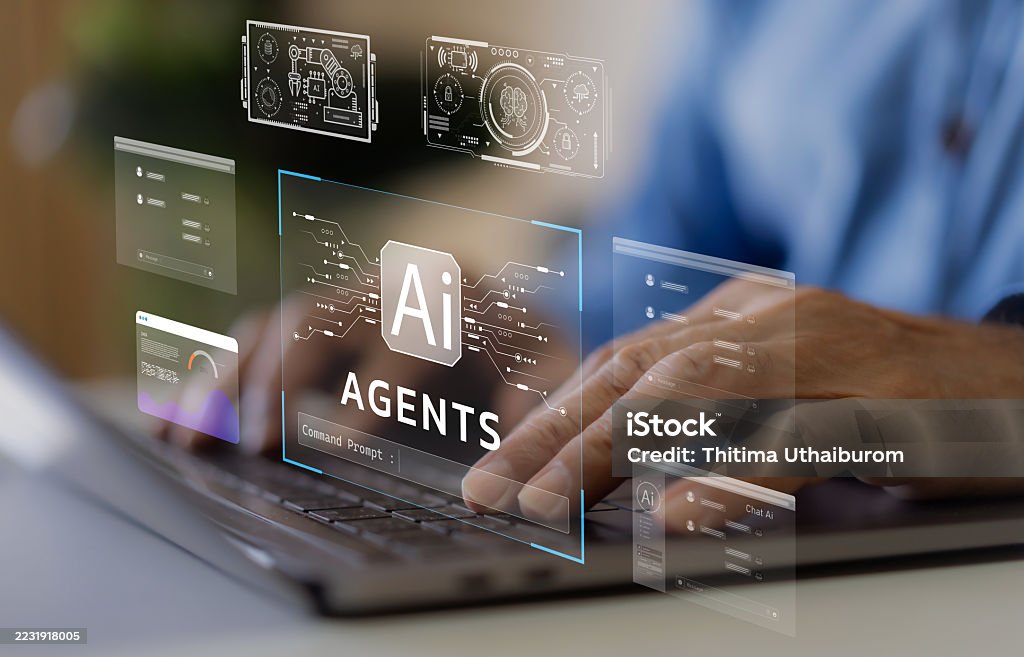
Unlike traditional chatbots that simply respond to immediate prompts, autonomous AI agents operate with a degree of self-direction. Given a high-level goal, an autonomous agent breaks the task down into sub-goals, selects the appropriate tools, executes necessary actions, and evaluates its own progress until the objective is completed.
For example, if you ask a standard generative tool to “organize a marketing campaign,” it might offer an outline. An autonomous AI agent, however, can draft the content, schedule social media posts, analyze performance metrics, and dynamically adjust future posts based on engagement data.
Key Applications Driving Industry Adoption
The practical integration of autonomous agents spans multiple sectors, changing how daily operations are executed:
○Software Development: AI agents can now write, test, and debug code independently. They review pull requests, identify security vulnerabilities, and propose optimized solutions, dramatically accelerating development cycles.
○Customer Support Systems: Beyond basic auto-responders, autonomous agents can access knowledge bases, resolve complex account issues, issue refunds, and escalate edge cases to human managers only when necessary.
○ Data Analysis & Financial Modeling: Modern agents can ingest vast datasets, run statistical models, identify market trends, and generate comprehensive reports without constant manual guidance.
The Value of Human-in-the-Loop Integration
While autonomous agents offer remarkable efficiency, the most effective implementations follow a Human-in-the-Loop (HITL) framework. Full automation without oversight presents risks, including algorithmic bias, logic loops, and hallucinated data outputs.By pairing human judgment with machine speed, organizations achieve optimal results. Humans set ethical boundaries, verify critical outputs, and provide strategic direction, while AI agents handle time-consuming operational execution. This synergy enhances productivity without compromising quality or safety.
Addressing Privacy, Security, and Governance
As autonomous AI becomes deeply embedded in enterprise infrastructure, data privacy and cybersecurity become paramount concerns. Adopting responsible AI practices requires:
1. Strict Access Control: Limiting the permissions granted to AI agents to prevent unauthorized data manipulation.
2.Data Encryption: Ensuring all inputs and outputs processed by autonomous models remain fully encrypted.
3.Auditability: Maintaining clear activity logs so human operators can trace the exact logic and actions an agent took to reach a conclusion.
Addressing these security challenges transparently builds trust with end users and ensures compliance with evolving international data regulations.
Conclusion: Embracing the Next Frontier
The rise of autonomous AI agents is not about replacing human creativity; it is about liberating professionals from repetitive tasks so they can focus on high-level innovation and strategy.As these tools continue to mature, staying informed and adaptable will be the key to thriving in the modern economy. Businesses and individuals who actively learn to direct, audit, and collaborate with autonomous AI will lead the next decade of digital transformation
The Impact of Technology and Artificial Intelligence in the Modern World