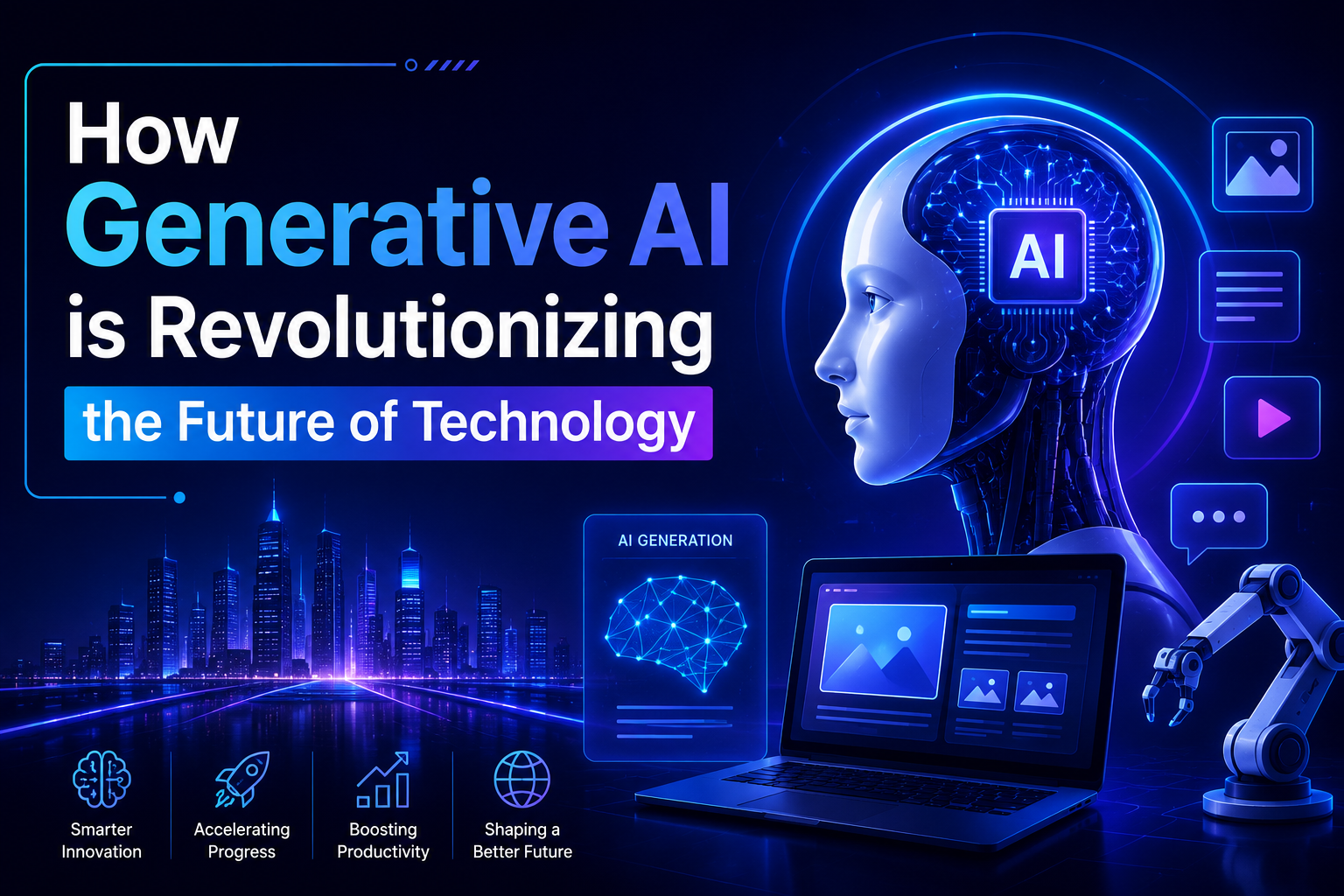
Technology evolves at a rapid pace, but few innovations have reshaped the digital landscape as dramatically as Generative AI. From writing complex software code to generating photorealistic imagery and original text, this breakthrough form of artificial intelligence is fundamentally changing how humans create, work, and innovate. Understanding Generative AI is no longer optional—it is essential for anyone looking to navigate the future of technology.
What is Generative AI?
At its core, Generative AI refers to deep-learning models that can analyze vast amounts of data to generate brand-new, original content. Unlike traditional artificial intelligence, which primarily analyzes existing data to make predictions or recognize patterns, generative systems create new outputs. Using advanced neural networks, such as Transformers, these models learn the underlying structure of their training data to produce text, images, audio, video, and code that mimic human creativity.
Popular examples of this technology include large language models (LLMs) used for content generation, as well as diffusion models that turn simple text prompts into striking visual artwork.
Key Applications Transforming Industries
The real-world impact of Generative AI spans virtually every major sector:
●Software Development: Automated coding assistants can generate code snippets, debug errors, and suggest optimizations, significantly speeding up the software lifecycle.
●Content Creation & Marketing: Marketers and writers use AI tools to brainstorm concepts, draft articles, generate social media copy, and personalize customer communication.
●Healthcare & Drug Discovery: Researchers leverage generative models to predict molecular structures and accelerate the discovery of life-saving pharmaceuticals.
● Design & Entertainment: Graphic designers, video game developers, and filmmakers utilize generative technology to rapidly prototype visuals and design assets.
The Benefits: Efficiency and Enhanced Creativity
The primary advantage of adopting Generative AI is the massive boost in productivity and efficiency. Tasks that previously took days or weeks—such as writing initial research drafts, designing basic wireframes, or organizing unstructured data—can now be accomplished in a matter of minutes.
Furthermore, Generative AI acts as a collaborative partner rather than a replacement for human intelligence. By handling repetitive and time-consuming tasks, it frees professionals to focus on strategy, critical thinking, and higher-level creative problem-solving
Challenges and Ethical Considerations
Despite its impressive capabilities, the rise of Generative AI comes with notable challenges that businesses and developers must address:
1.Data Accuracy and Hallucinations: AI models can sometimes generate plausible-sounding but completely incorrect information, requiring careful human oversight.
2.Intellectual Property & Copyright: Questions surrounding the ownership of AI-generated content and the use of copyrighted data for model training remain complex legal issues.
3.Cybersecurity Concerns: As generative tools become more sophisticated, bad actors can potentially misuse them to create convincing phishing scams or malicious code.
The Road Ahead
The trajectory of Generative AI points toward deeper integration into everyday business tools and operating systems. As these models become more precise, multimodal, and energy-efficient, their ability to solve complex global challenges will only expand.Organizations and individuals who take the time to learn, adapt, and ethically integrate Generative AI into their workflows today will hold a significant competitive advantage tomorrow. The future of technology is not just about automation—it is about human-AI collaboration powering the next wave of innovation.
What is a simple definition of technology?