Introduction:-
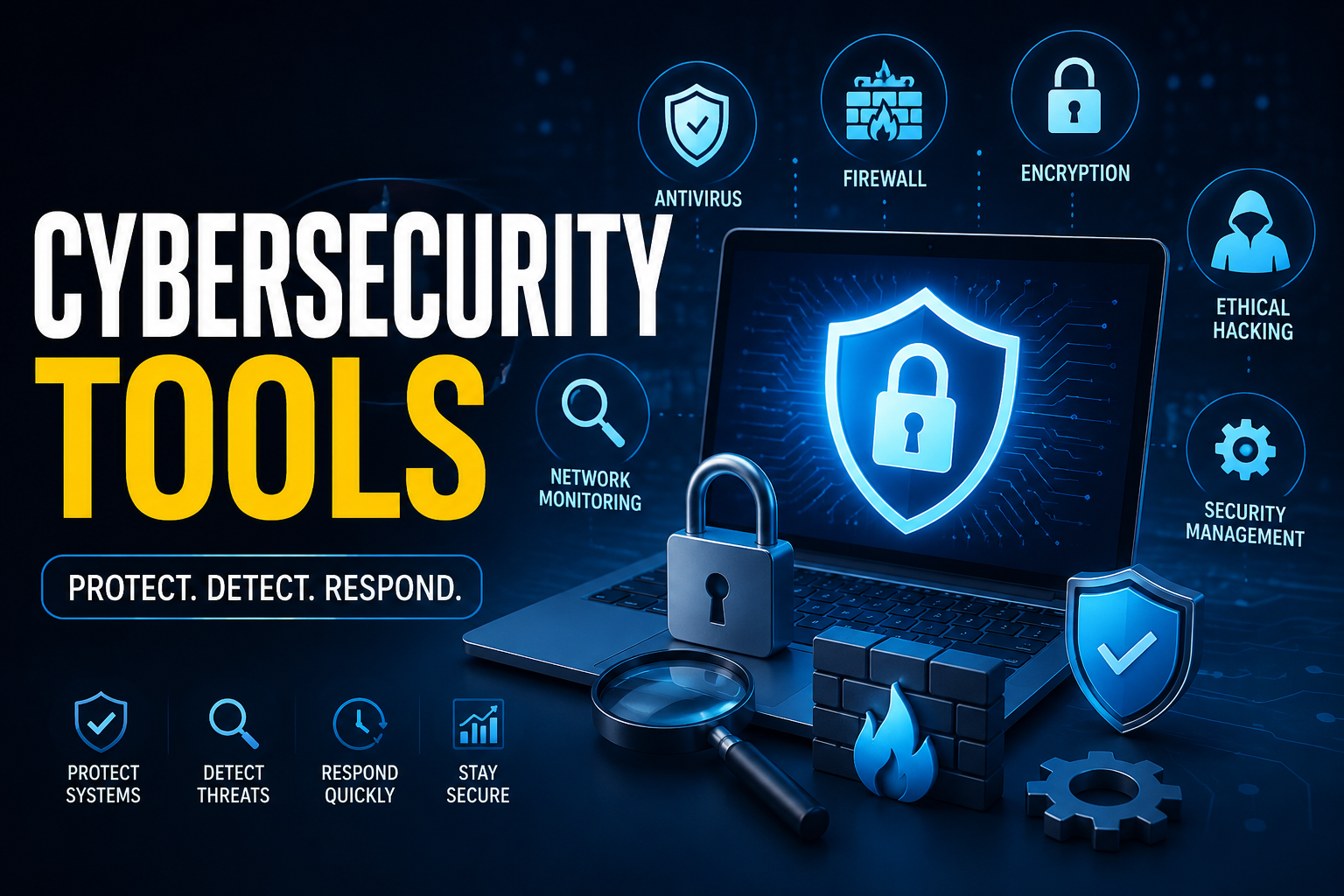
Cybersecurity tools are becoming more important as people and businesses spend more time online. From personal accounts and smartphones to websites and business networks, digital information can face many security threats. Hackers, malware, phishing attacks, and data breaches can cause serious problems when systems are not properly protected.
Cybersecurity tools are software, services, or technologies designed to protect computers, networks, applications, and data from digital threats. Using the right tools can help users detect suspicious activity, protect sensitive information, and respond quickly to security problems.
In this article, we will explore the main types of cybersecurity tools, their benefits, and why they are important for modern internet users.
What Are Cybersecurity Tools?
Cybersecurity tools are technologies used to prevent, detect, and respond to cyber threats. They can protect individual devices, company networks, online accounts, and valuable data
Some tools work in the background and automatically detect dangerous files, while others allow security professionals to monitor networks and investigate suspicious activity.
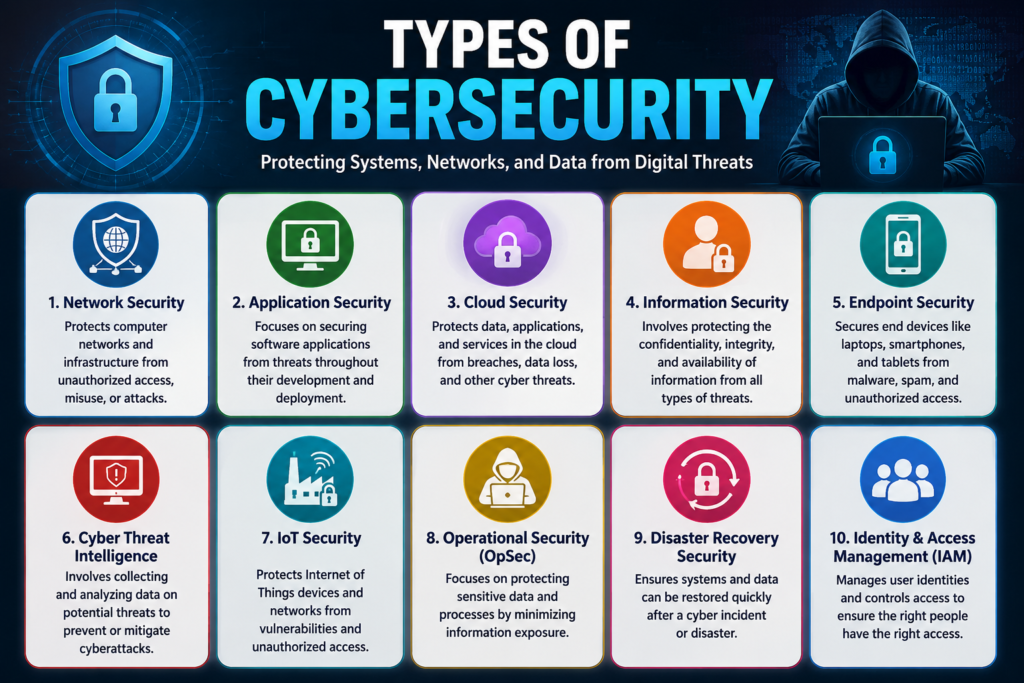
Types of Cybersecurity Tools
Antivirus Software
Antivirus is one of the most well-known cybersecurity tools. It scans devices to detect malware such as viruses, trojans, spyware, and other harmful programs.
Modern antivirus software can provide real-time protection and automatically block suspicious files before they cause damage
Modern antivirus software can provide real-time protection and automatically block suspicious files before they cause damage
Modern antivirus software can provide real-time protection and automatically block suspicious files before they cause damage
Modern antivirus software can provide real-time protection and automatically block suspicious files before they cause damage
firewalls
A firewall monitors network traffic between a device or network and the internet. It can block unauthorized connections while allowing legitimate traffic.
Firewalls are important for both individuals and organizations because they provide a key layer of protection against unwanted access.
3.Password Managers
Password managers help users create, store, and manage strong passwords. Instead of remembering many passwords, they can be securely stored in a single protected application.
Using different passwords for each account reduces the damage that can occur if one password is stolen.
4.VPN Tools
AVPN Tools VPN (Virtual Private Network) encrypts internet traffic and increases privacy when using online services. It is especially useful when using public Wi-Fi.However, a VPN should be seen as part of online security, not a complete solution that protects against all cyber threats.
5.Encryption Tools
Encryption tools protect data by converting it into an unreadable format. Only someone with the correct key can access the original information.
Encryption is widely used to protect files, communications, financial data, and other sensitive information.
6.Network Monitoring Tools
These tools help security teams monitor network activity. They can detect unusual traffic, suspicious connections, and potential security incidents.They are especially important for organizations that manage large networks and many devices.
7.Vulnerability Scanners
Vulnerability scanners examine systems, applications, and networks to find known security weaknesses. Early detection of vulnerabilities allows them to be fixed before attackers can exploit them.Regular security scanning is an important part of a company’s security strategy.
Benefits of Using Cybersecurity Tools
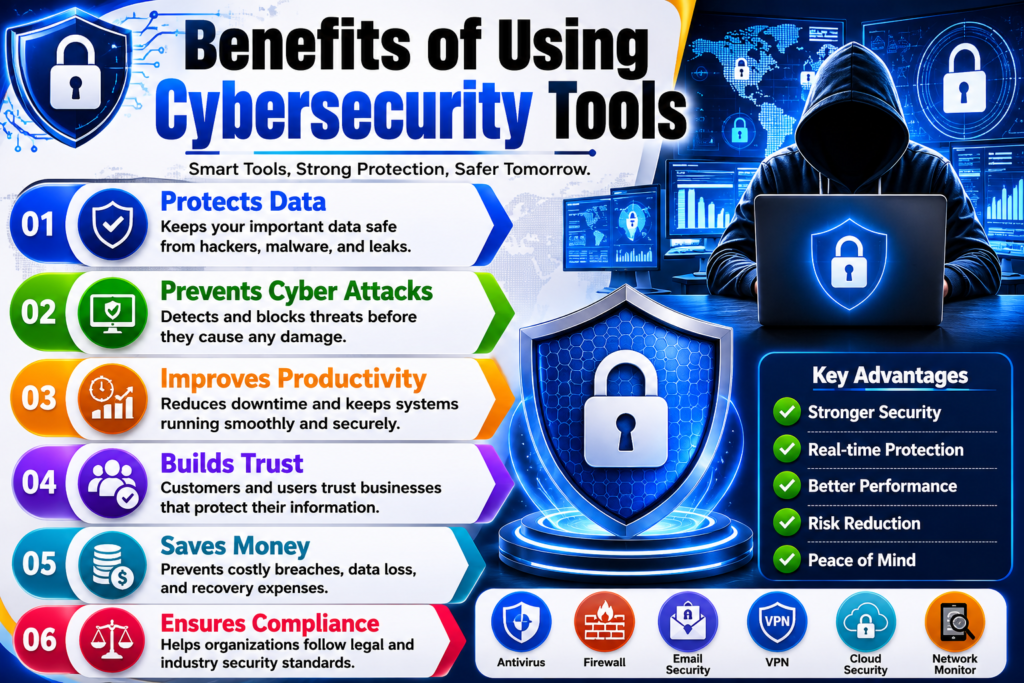
Cybersecurity tools offer many benefits. They help protect personal data, reduce the risk of malware, detect suspicious activity, and improve digital
privacy.For organizations, these tools also help protect customer data, company systems, and important files. Automated monitoring can save security teams time by identifying problems early.
How to Choose the Right Cybersecurity Tools
Choosing cybersecurity tools depends on your needs. A home user may need antivirus software, a password manager, and reliable device protection. A growing business may require firewalls, network monitoring, vulnerability scanning, encryption, and other security solutions.
Before choosing a tool, consider its security features, ease of use, compatibility, reputation, update frequency, and cost. It is also important to keep security software updated, as new threats appear regularly
Conclusion
Cybersecurity tools play a vital role in protecting individuals, organizations, devices, and data from online threats. Antivirus, firewalls, password managers, VPNs, encryption tools, network monitoring, and vulnerability scanners each provide different layers of protection.
No single tool can stop all cyberattacks. A combination of appropriate security tools, strong passwords, regular updates, and careful online behavior can create a very strong defense.
As technology continues to evolve, cybersecurity will remain an essential part of safe and responsible internet use.
Password Managers: The Key to Your Digital Security