simple defintion
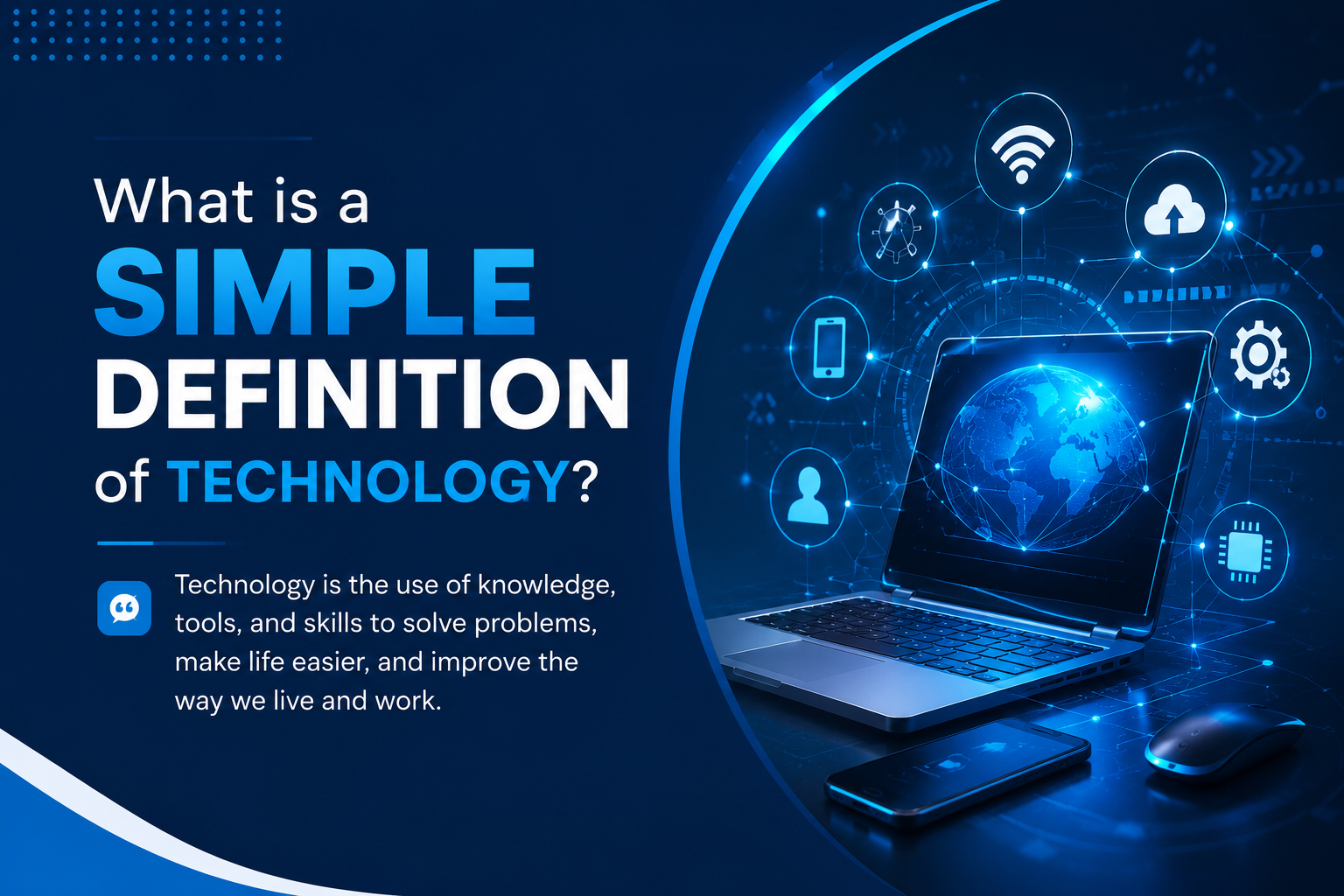
Technology is the practical application of scientific knowledge, tools, and skills to solve real-world problems and simplify everyday human tasks.
What is Technology? How It Shapes Our World and Powers the Future?
Look around you right now. The smartphone in your hand, the computer screen you are reading from, the software powering this website, and even the electric lighting in your room are all direct products of technology. Yet, when most people hear the word “technology,” they immediately think of modern gadgets, microchips, and internet algorithms.
In reality, technology is a far broader concept. It encompasses every tool, technique, system, and method humans have developed since the beginning of civilization to solve problems, adapt to their environment, and make daily life more efficient. Understanding how technology functions—and how to harness it—is one of the most critical skills in the modern world.
The Core Pillars of Modern Technology
Technology is not a single industry; it spans almost every aspect of human life. We can break it down into several essential categories that drive society forward today:
○ Information and Communication Technology (ICT): This includes the internet, wireless networks, mobile devices, and software applications. It serves as the digital backbone of global connectivity, enabling instant communication across continents.
○Medical Technology: From advanced imaging equipment like MRI machines to life-saving pharmaceuticals, biotechnology, and surgical robotics, medical tech continuously extends human lifespans and improves public health.
○ Industrial and Manufacturing Tech: Automated assembly lines, 3D printing, and artificial intelligence optimize production, allowing goods to be created faster, cheaper, and with higher precision.
○ Energy and Environmental Tech: Solar panels, wind turbines, electric vehicles, and battery storage systems are transforming how we produce and consume energy to build a sustainable future.
How Technology Impacts Daily Life and Economy
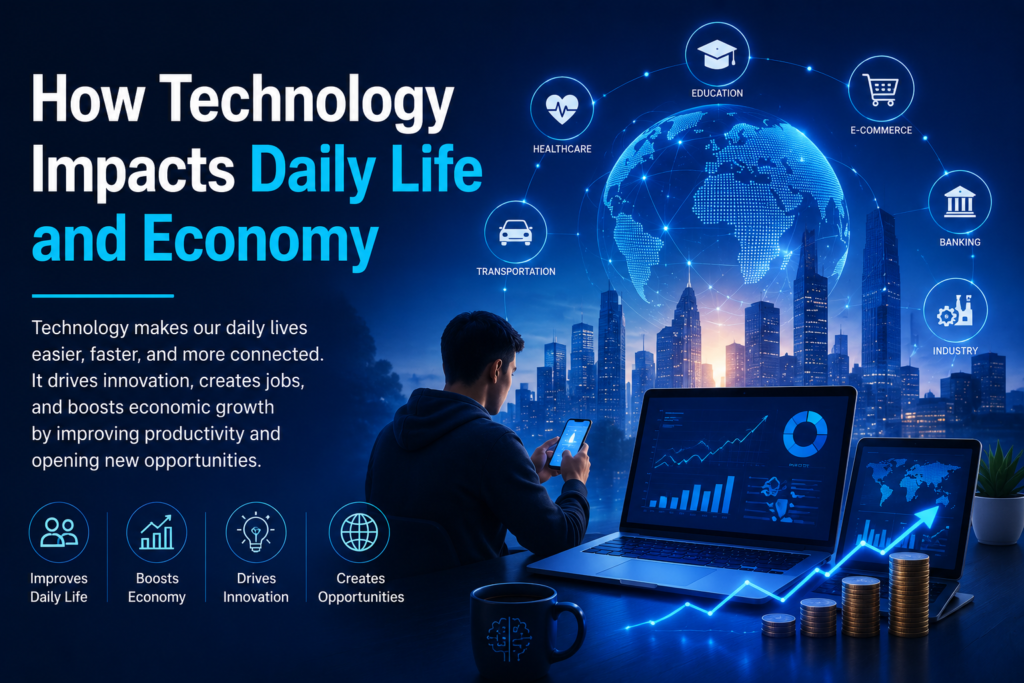
It is almost impossible to overstate the profound effect technology has on modern society. Here are three primary ways it reshapes our daily experiences:
1.Instant Access to Information: Decades ago, finding answers meant spending hours in a physical library. Today, virtually all human knowledge is indexed and accessible within seconds from a pocket-sized device.
2. Transformation of the Global Economy: Traditional business models relied heavily on local storefronts and physical inventory. Today, e-commerce, digital payments, and remote work platforms allow businesses to operate globally 24/7.
3. Enhanced Productivity: Automation and software tools eliminate repetitive manual tasks, freeing up human workers to focus on creative problem-solving, strategic decision-making, and innovation.
How to Leverage Technology for Personal and Professional Growth:
Rather than simply consuming technology for entertainment, the real value lies in using it as a tool for personal advancement. Here is how you can take advantage of it today:
1.Master High-Demand Digital Skills: Fields like software development, data analysis, digital marketing, content creation, and cybersecurity offer vast career opportunities and high earning potential.
2.Build an Online Presence: Whether through a personal blog, e-commerce store, or portfolio, having a digital footprint allows you to showcase your expertise and reach a global audience
3.Utilize Continuous Online Learning: Digital platforms offer flexible, low-cost (or free) education on almost any topic imaginable, allowing you to upskill at your own pace.
Conclusion
Technology is fundamentally an extension of human capability. It is neither inherently good nor bad; its value depends entirely on how we choose to build and apply it. As artificial intelligence and automation continue to evolve rapidly, staying curious, adaptable, and willing to learn will be the best strategy to thrive in a tech-driven world.